推翻专制统治者的三种武器
Three Well-Tested Ways to Undermine an Autocrat
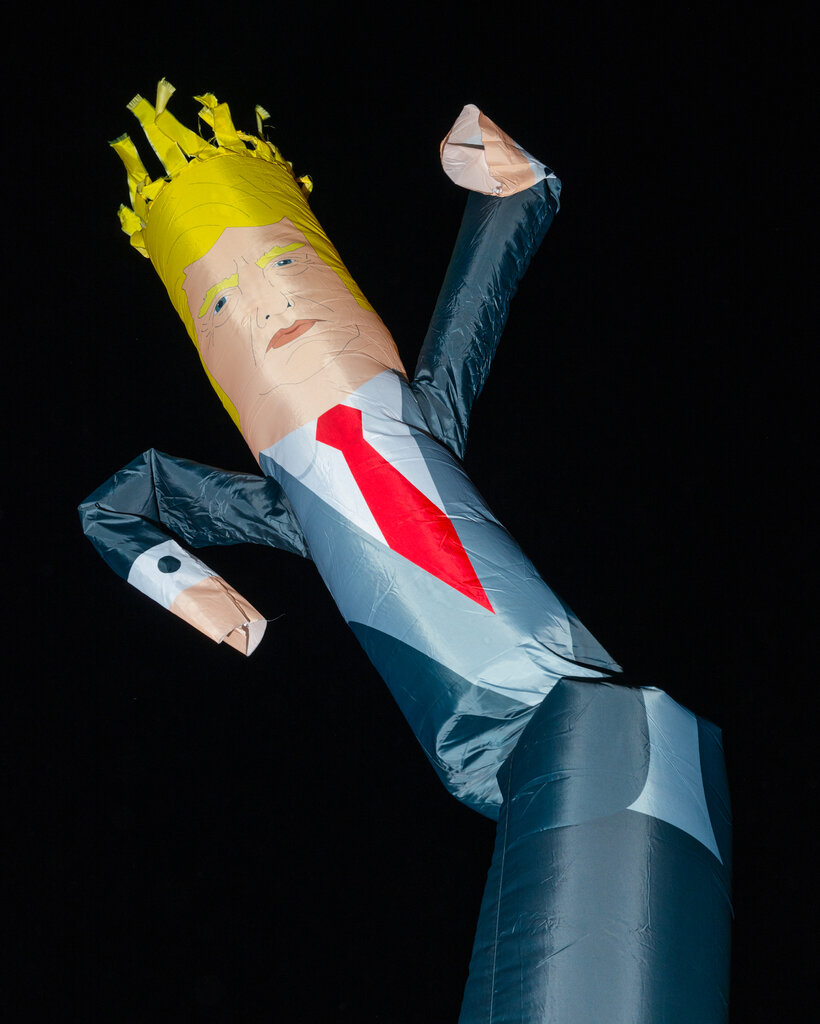
The question I get most often is: What can we do to take our country back?
我最常被问到的问题是:我们如何才能夺回自己的国家?
So let me try to answer, drawing on lessons from other countries that have faced authoritarian challenges.
那么,让我利用从其他面临威权挑战的国家那里获得的经验,看看能否回答这个问题。
The funny thing is that there’s a playbook for overturning autocrats. It was written here in America, by a rumpled political scientist I knew named Gene Sharp. While little known in the United States before his death in 2018, he was celebrated abroad, and his tool kit was used by activists in Eastern Europe, in the Middle East and across Asia. His books, emphasizing nonviolent protests that become contagious, have been translated into at least 34 languages.
有意思的是,推翻专制政权这件事还有战术书可用。书是在美国写的,作者我还认识,他就是不修边幅的政治学家吉恩·夏普。尽管生前在美国籍籍无名,他在国外得到很高的评价,他提供的手段被东欧、中东和亚洲各地的活动人士取用。他的多部作品都强调具有感染力的非暴力抗议,已被至少翻译成34种语言。
广告
A soft-spoken scholar working from his Boston apartment, Sharp recommended 198 actions that were often performative, ranging from hunger strikes to sex boycotts to mock funerals.
夏普是一位谦和的学者,在位于波士顿的寓所里工作,他提出了198项往往具有表演性质的行动,从绝食抗议到性抵制,再到模拟葬礼,不一而足。
“Dictators are never as strong as they tell you they are,” he once said, “and people are never as weak as they think they are.”
他曾经说过,“独裁者从来不像他们宣称的那样强大,而人民也从来不像自己以为的那样软弱。”
The Democrats’ message last year revolved in part around earnest appeals to democratic values, but one of the lessons from anti-authoritarian movements around the world is that such abstract arguments aren’t terribly effective. Rather, three other approaches, drawing on Sharp’s work, seem to work better.
民主党去年传达的信息部分围绕着对民主价值观的真诚呼吁,但从世界各地的反威权运动中得出的一个教训是,这种抽象的论点并不十分有效。事实上,借鉴夏普的研究成果,其他三种方法似乎效果来得更好。
The first is mockery and humor — preferably salacious.
首先是嘲讽和幽默——最好是黄段子。
Wang Dan, a leader of China’s 1989 Tiananmen Square democracy demonstrations, told me that in China, puns often “resonate more than solemn political slogans.”
1989年天安门民主示威运动的学生领袖之一王丹跟我说过,在中国,双关语往往“比严肃的政治口号更能引发共鸣”。
The Chinese internet for a time delighted in grass-mud horses — which may puzzle future zoologists exploring Chinese archives, for there is no such animal. It’s all a bawdy joke: In Chinese, “grass-mud horse” sounds very much like a curse, one so vulgar it would make your screen blush. But on its face it is an innocent homonym about an animal and thus is used to mock China’s censors.
“草泥马”曾经在中国的网络上风行一时——这可能会让未来研究中国档案的动物学家感到困惑,因为根本没有这样一种动物。这其实是个粗俗的玩笑话:在中文里,“草泥马”和一句脏话音近,其露骨程度足以让你的屏幕都感到不好意思。但它表面上的意思是一种天真无邪的动物,因此被用来捉弄中国的网络审查员。
广告
Shops in China peddled dolls of grass-mud horses (resembling alpacas), and a faux nature documentary described their habits. One Chinese song recounted the epic conflict between grass-mud horses and river crabs — because “river crab” is a play on the Chinese term for censorship. It optimistically declared the horses triumphant.
中国的商家出售形似羊驼的草泥马玩偶,一部伪纪录片还煞有介事地描述它的习性。更有中文歌曲描绘了草泥马与河蟹的史诗之战——因“河蟹”是“和谐”的谐音。这首歌最终以草泥马获胜告终。
“They defeated the river crabs in order to protect their grassland,” it declared. “River crabs forever disappeared.”
“他们为了卧草不被吃掉,打败了河蟹,河蟹从此消失,”歌中唱道。
Humor puts autocrats in a difficult position. They look ridiculous if they crack down on jokes but look weak if they ignore them. What’s a dictator to do?
幽默让威权者陷入两难境地:如果镇压笑话,就显得荒谬可笑;如果置之不理又显得软弱。独裁者有何计可施?
Take President Xi Jinping of China, who is sometimes mocked for resembling Winnie-the-Pooh. So China bans Pooh bear images and movies — giving people more reason to laugh at him.
就拿中国国家主席习近平来说,有时人们嘲笑他长得像小熊维尼。因此,中国禁止了维尼熊的图像和电影,但这让人们有更多理由来嘲笑他。
Neither Winnie-the-Pooh nor a cavalry of grass-mud horses will topple Xi, but wit did help overthrow the Serbian despot Slobodan Milosevic in 2000. A dissident group called Otpor was so modest in size that protests by it wouldn’t have been noticed. But Otpor, relying heavily on Sharp’s work, engaged in street theater that got people buzzing: In Belgrade it put Milosevic’s image on a barrel and encouraged passers-by to whack it with a bat.
无论是小熊维尼还是草泥马大军,都不足以推翻习近平。但正是这种机智在2000年成功推翻了塞尔维亚的独裁者米洛舍维奇。当时名为“抵抗”(Otpor)的异议团体规模极小,它的抗议活动根本不会引起人们的注意。然而,该组织深度借鉴夏普的理论,通过街头剧场引发舆论轰动——他们在贝尔格莱德街头放置印有米洛舍维奇头像的木桶,鼓动路人挥棒击打它。
“Seeing a group of devil-may-care young people ridiculing Milosevic made onlookers smile,” Tina Rosenberg writes in her book “Join the Club,” “and encouraged them to think about the regime, and their own role, in a different light.”
“看到一群不管不顾的年轻人嘲笑米洛舍维奇,围观者都会心一笑,”蒂娜·罗森伯格在她的《加入俱乐部》一书中写道。“这也鼓励他们从另一个角度思考这个政权和他们自己的角色。”
广告
Rosenberg quoted one Otpor leader as saying, “It was a great party all the time.” This made the protests trendy and cool, the ridicule grew contagious, and eventually the opposition became a mass movement that forced Milosevic to resign.
罗森伯格援引一个“抵抗”组织领袖的说法:“那就像一场永不散场的狂欢。”这使得抗议活动变得时髦、酷炫,嘲笑越来越具有感染力,最终反对运动变成了一场迫使米洛舍维奇下台的群众运动。
A second approach that has often succeeded is emphasizing not democracy as such but rather highlighting the leaders’ corruption, hypocrisy and economic mismanagement.
另一种屡试不爽的策略是不强调民主本身,而是聚焦统治者的腐败、虚伪与经济管理不善。
Critics usually have plenty of ammunition when pointing to hypocrisy, for authoritarians tend to preen as moral guardians while the lack of accountability often leads to, er, lapses. One example: The police chief in Tehran, who was in charge of enforcing the Islamic dress code for women, was reportedly found naked in a brothel with six equally naked prostitutes.
批评者在指出虚伪时通常有充足的弹药,因为专制者往往以道德卫士自居,而缺乏问责制往往会导致,呃,行为失检。举例来说:据报道,德黑兰负责执行伊斯兰妇女着装规定的警察局长被发现在一家妓院中赤身裸体,与六名同样赤身裸体的妓女在一起。
Corruption is also usually an easy target, because as autocrats become increasingly powerful, they and their family members often decide to enrich themselves: Wherever there is authoritarianism, there is corruption.
腐败问题通常也是现成的靶子,因为随着专制者的权力越来越大,他们及其家庭成员往往会中饱私囊:专制所及之处必生腐败。
Chinese officials understand the sensitivity of the issue: They have told me that they’re fine with journalists like me criticizing the Communist Party for repression or bad policies, but can we please just lay off reporting on the finances of party leaders (like the former prime minister whose family was so hard working that it rose from poverty and amassed at least $2.7 billion)?
中国官员深谙此事的敏感性:他们曾向我坦言,可以容忍像我这样的记者批评共产党的镇压政策或决策失误,但能不能就不要再报道领导人的财务状况(比如那位前总理,家人勤勉致富,至少积聚了27亿美元资产)?
One of the people who seemed to scare President Vladimir Putin the most was Aleksei Navalny, a master of mockery who posted videos of extravagances such as Putin’s apparent $1 billion pleasure palace — and who, when imprisoned in the gulag, announced that he had tried to unionize the guards.
阿列克谢·纳瓦尔尼似乎曾是最让普京总统恐惧的人之一,他是一位嘲讽大师,曾在网上发布普京据说耗资10亿美元建造的豪华宫殿等奢靡之物的视频。在被关进古拉格后,他还宣布自己曾试图让看守们组成工会。
广告
The third approach that has often succeeded is focusing on the power of one — an individual tragedy rather than a sea of oppression. Protesters against apartheid used to employ the slogan, “Free South African political prisoners,” but that never got much traction. Then they switched to “Free Nelson Mandela,” and we know the rest.
第三种行之有效的策略是聚焦个体的力量——用个人悲剧取代大规模的压迫。反种族隔离运动曾使用“释放南非政治犯”的口号,但收效甚微,直至改为“释放曼德拉”才扭转乾坤,之后的故事就世人皆知了。
Likewise, the Arab Spring began in 2010 with a single wrenching story: A 26-year-old Tunisian street vendor set himself on fire to protest corruption — and millions of other Arabs demonstrated against their rulers.
无独有偶,阿拉伯之春的爆发亦始于2010年的一桩个体悲剧:一名26岁的突尼斯街头小贩自焚以抗议覆盖,继而引发数百万阿拉伯民众上街反抗统治者。
In Iran, six months of protests started in 2022 when a young woman, Mahsa Amini, died after being arrested by police for wearing her hijab improperly. “With her killing, people lost their patience and poured into the streets,” Nasrin Sotoudeh, an Iranian lawyer known for her defense of human rights, told me.
2022年,伊朗持续半年的抗议浪潮起缘于年轻女子玛莎·阿米尼因头巾佩戴不当遭警方逮捕后死亡。“她的遇害彻底击穿了民众的忍耐底线,”伊朗知名人权律师纳斯林·索托德告诉我,“人们如潮水般涌上街头。”
Sotoudeh noted that even a single creative protest by an ordinary person can ignite a broader movement. She cited the woman who in 2017 stood on a Tehran street, removed her head scarf and waved it at the end of a stick; the incident went viral and began the “girls of revolution street” movement to end the compulsory hijab. And while the hijab law remains in place, women now sometimes get away with ignoring it.
We often think of politicians as the natural leaders of such movements. But it’s striking how often the stars have been from other worlds. A shipyard electrician in Poland named Lech Walesa. A Czech playwright named Vaclav Havel. Female lawyers in Iran. A female engineering student in Sudan. A widow and housewife in the Philippines named Corazon Aquino.
There’s no simple formula for challenging authoritarianism. But these approaches have enjoyed a measure of success abroad and may be ones we Americans could learn from.
挑战威权主义没有简单的公式。但这些方法在国外取得了一定程度的成功,可能是我们美国人可以学习借鉴的。
广告
In my next column, I’ll look at how such a strategy might unfold in the United States.
在我的下一篇专栏中,我将探讨此类策略在美国可以如何展开。


